Industrial Waste Recovery
N. CAROLINA Salt Reclamation Project
200 Tons of Unusable Road Salt Reclaimed in 2 Days
Project Overview
A North Carolina client had a problem most contractors would call unsolvable: 200 tons of road salt had turned into a single, solid brick after sitting outdoors through rain, sun, and temperature swings.
The salt was supposed to be ready for winter road treatment. Instead, it was a giant unusable mass. The client faced two bad options:
- Pay to dispose of 200 tons of salt as waste
- Buy 200 tons of replacement salt at market rates
Neither option was cheap. We offered a third option: fix it.
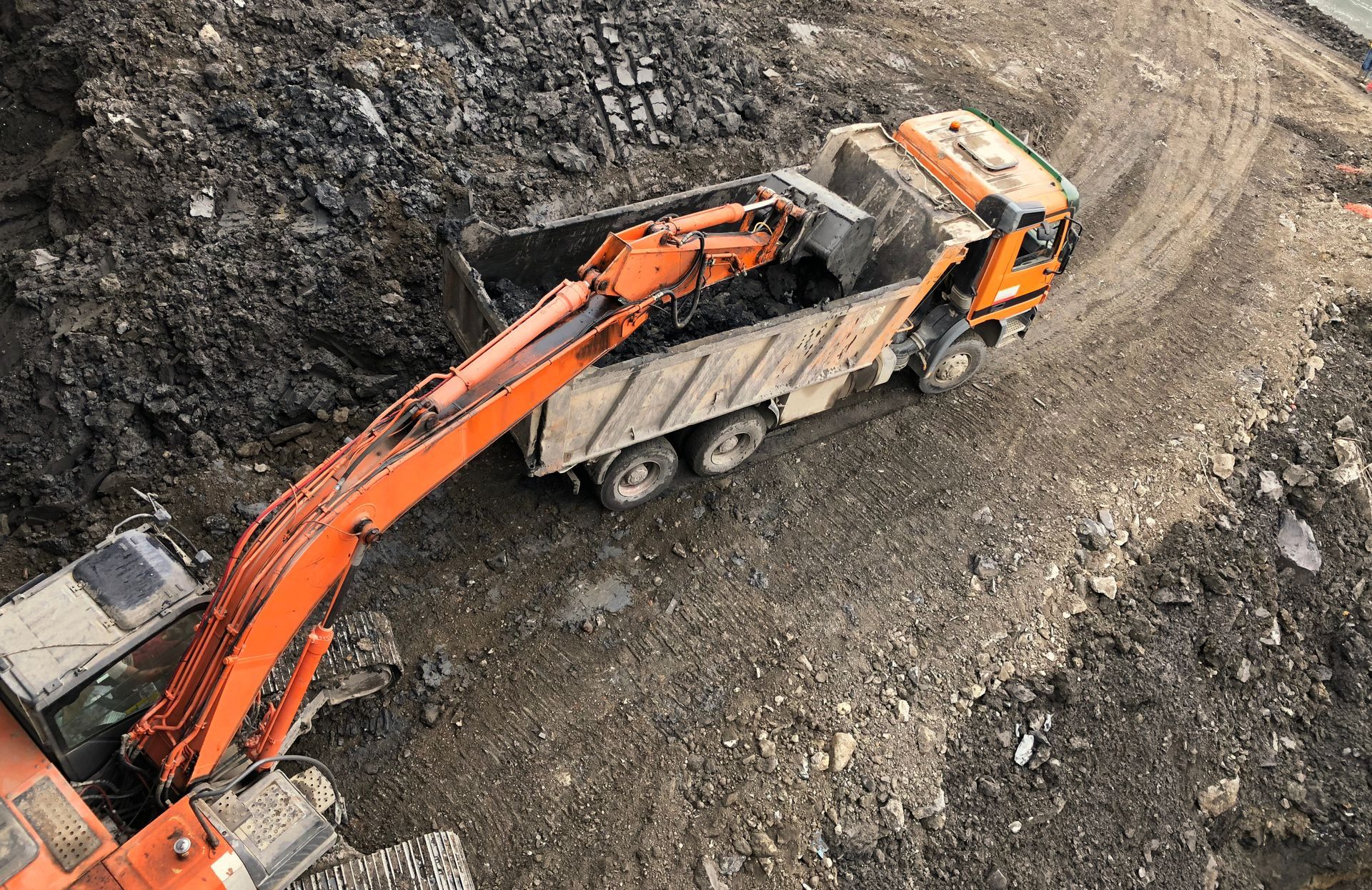
Using a specialized grinding attachment on a skid-steer loader, we broke down the solid brick and restored the salt to its original free-flowing state in just 2 days.
Project Snapshot
Timeline:
2 days
Salt reclaimed:
200 tons
Disposal cost avoided:
$15,000+
Replacement cost avoided:
$20,000+
Result:
Fully usable road salt ready for immediate deployment
| Detail | Specification |
|---|---|
| Location | North Carolina |
| Client Type | Municipal public works department |
| Material | Road salt (sodium chloride de-icing agent) |
| Volume | 200 tons |
| Problem | Outdoor storage caused solidification into unusable brick |
| Challenge | Avoid disposal and replacement costs |
| Our Solution | Mechanical grinding to restore free-flowing state |
| Equipment | Skid-steer loader with specialized grinding attachment |
| Timeline | 2 days |
The Challenge:
From Stockpile to Solid Brick
Road salt is hygroscopic—it absorbs moisture from rain, humidity, and even air. When stored outdoors without proper cover, salt stockpiles go through a destructive cycle:
What happens to exposed salt:
- Moisture absorption – Rain and humidity penetrate the pile
- Dissolution – Surface salt dissolves into brine
- Recrystallization – Sun and heat evaporate water, leaving larger salt crystals
- Compression – Weight of the pile presses layers together
- Solidification – Over time, the entire mass fuses into a concrete-hard brick
Why this is a problem:
- Salt spreading equipment requires free-flowing granules
- Solid masses won't feed into hoppers or augers
- You can't break it up by hand—it's rock-hard
- Standard equipment (front loaders, shovels) just bounces off the surface
The client had stored their winter salt supply outdoors during a particularly wet season. By the time they needed it, the stockpile had turned into one enormous 200-ton block.
Their options:
- Option 1: Dispose of it as waste and buy new salt ($35,000+ total cost)
- Option 2: Leave it and operate without sufficient de-icing material (unacceptable safety risk)
- Option 3: Find someone who could break it down and restore it (no one does this... except us)
Our Approach:
Mechanical Restoration, Not Disposal
Most waste contractors would have treated this as a disposal job—haul it to a landfill and move on. But we saw a better solution: reclaim the salt instead of replacing it.
We had the equipment, the experience, and a track record of creative problem-solving. We'd used our grinding attachment on everything from contaminated soil to industrial sludge. Salt would be no different—just harder.
Step 1: Site Assessment and Equipment Selection
We evaluated the salt brick's size, hardness, and location. The assessment confirmed:
- Material was extremely hard—comparable to low-grade concrete
- Needed aggressive grinding, not just breaking or crushing
- Had to avoid generating excessive dust (environmental and safety concern)
- Client needed the salt in original granular form, not powder
Equipment selected:
- Skid-steer loader with high hydraulic flow (30+ GPM)
- Heavy-duty grinding attachment (rock cutter-style head)
- Dust suppression sprayer (water mist to control airborne particles)
This combination had worked on similar hard-packed materials before. We mobilized immediately.
Step 2: Mechanical Grinding
The grinding attachment works like an industrial rock crusher:
- Rotating carbide teeth bite into the salt brick
- Hydraulic pressure forces the grinder deeper into the material
- Broken chunks are pushed aside while the grinder continues forward
- Process repeats in overlapping passes until entire mass is reduced
Why grinding works better than breaking:
- Controlled particle size – Produces coarse granules, not powder
- Complete breakdown – No large chunks left behind
- Uniform consistency – Salt flows evenly through spreader equipment
- Fast processing – Continuous operation without stopping to reposition
We worked methodically through the 200-ton pile:
- Day 1: Ground through the top and outer layers (highest compression)
- Day 2: Finished interior sections and processed remaining material
The salt was fed directly into a large storage hopper as we worked—ready for immediate use.
Step 3: Quality Check and Handoff
Once grinding was complete, we tested the reclaimed salt:
Particle size: Coarse granules matching original specification
Flow rate: Poured freely through hopper openings
Moisture content: Slightly elevated but acceptable for immediate use
Contamination: None—pure sodium chloride
The client confirmed the salt would flow through their spreader trucks without issue. We turned over 200 tons of fully functional road treatment material.
Timeline: 2 days from mobilization to completion.
Results:
$35,000+ Saved, Zero Waste Generated
| Metric | Result |
|---|---|
| Timeline | 2 days |
| Salt reclaimed | 200 tons |
| Disposal cost avoided | ~$15,000 (hauling + landfill fees) |
| Replacement cost avoided | ~$20,000 (200 tons @ $100/ton) |
| Total savings | $35,000+ |
| Waste generated | Zero |
| Salt quality | Fully functional for road treatment |
Project Impact
No disposal expense –
Avoided landfill fees and hauling costs
No replacement purchase – Saved $20,000+ on new salt
Immediate availability – Material ready for use the same week
Budget relief – Freed up funds for other winter operations
Environmental win – Kept 200 tons of material out of landfills
METHODS USED in This Project
Material reclamation – Restoring unusable materials to functional state
Specialized grinding – Heavy-duty mechanical processing
Waste minimization – Eliminating disposal through creative solutions
Cost optimization – Saving clients money by avoiding unnecessary expenses
Rapid mobilization – 2-day turnaround from call to completion
Why Reclamation Beats Disposal
Cost savings: Even accounting for our service fee, reclamation cost a fraction of disposal + replacement. The client saved tens of thousands of dollars.
Speed: Disposal would have required contracting with haulers, scheduling landfill access, and waiting for replacement salt delivery. We finished in 2 days.
Sustainability: Disposal wastes perfectly good material. Reclamation keeps usable resources in circulation—better for budgets and the environment.
Problem-solving mindset: Most contractors see a disposal job because that's what they know. We saw an opportunity to deliver more value by thinking differently.
Equipment advantage: Our grinding attachment isn't common in the waste industry. We invested in specialized tools specifically to handle problems other contractors can't solve.
Industries WE SERVE
U.S. Waste Industries provides material reclamation and waste recovery for:
Municipal:
- Public works departments
- Road maintenance crews
- Parks and recreation facilities
- Water and wastewater treatment plants
Industrial:
- Chemical processing
- Manufacturing plants
- Mining and mineral processing
- Construction materials suppliers
Commercial:
- Landscape supply companies
- Material distribution centers
- Agricultural operations
REQUEST A QUOTE FOR LAGOON RESTORATION OR TREATMENT
Help us give you an accurate quote:
Have material you think is waste but might be salvageable?
Examples we've handled:
- Solidified bulk materials
- Contaminated recyclables
- Off-spec industrial products
- Hardened or crystallized chemicals
Related Projects